Zhara
The Beki CEO Got Me PregnantZhara is a company worker whose clandestine relationship with Vixon Rae brings private sexual conduct into the workplace and ultimately forces a public dispute over pregnancy and responsibility. Initially described by Kazumi Lhynx Valeres as flirtatious, rude, and widely disliked because of her behavior, Zhara is introduced through suspicion and condemnation rather than through an independent account of her life. Yet her actions become structurally important: the affair she shares with Vixon Rae turns an atmosphere of rumor into a crisis that Yohan Xyle Laroses cannot ignore.
Identity and Introduction
Zhara first appears as the woman with whom Vixon Rae is having sex. Kazumi Lhynx Valeres discovers them together and immediately recognizes Zhara as a worker at the company. The encounter is not merely a private scandal. Vixon Rae is found disheveled, sweating, and breathless near Room 57, which Kazumi identifies as Zhara’s room, making the physical evidence of the affair part of the workplace’s social and disciplinary reality.
Kazumi’s description of Zhara is sharply hostile. She regards Zhara as flirtatious and rude, and notes that many people resent her because of her bad attitude. This framing establishes Zhara as a disliked figure before she speaks for herself. It also shows how quickly sexual judgment and workplace reputation become entangled: Zhara is not introduced through her duties or relationships with colleagues, but through the scandalous interpretation imposed on her by another employee.
The Affair and Pregnancy
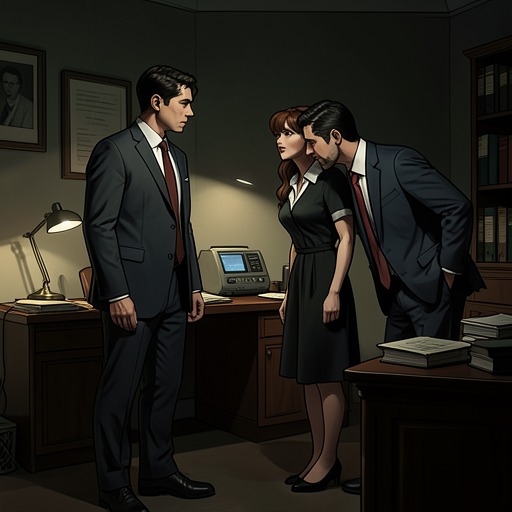
The relationship with Vixon Rae becomes consequential when Zhara discovers that she is pregnant. In the confrontation witnessed by Yohan Xyle Laroses and Kazumi Lhynx Valeres, Zhara explains that sex between her and Vixon Rae occurred in the office itself. After several weeks, she bought a pregnancy test because she was experiencing signs of pregnancy, and the result was positive. She recalls that both she and Vixon Rae were absent from work after she told him about the pregnancy, because she initially believed he would accept responsibility.
Vixon Rae instead curses her, drives her away, and insists that he does not care about her. His refusal transforms the pregnancy from a private matter into an accusation requiring intervention. Zhara’s account gives the conflict a concrete sequence: workplace sex, delayed recognition of pregnancy, disclosure to the father, an expectation of shared responsibility, and rejection. Her testimony also contrasts with Vixon Rae’s angry denial, presented from his own point of view, that he has no concern for her and will not be made responsible.
Conflict with Yohan Xyle Laroses and Vixon Rae
Yohan Xyle Laroses becomes the authority before whom the dispute is laid out. He orders Zhara and Vixon Rae to sit down and asks Zhara to explain what Vixon Rae has done. The arrangement turns a chaotic argument into an informal inquiry, with Zhara required to narrate the facts of the pregnancy and Vixon Rae forced to confront them in the presence of his employer and Kazumi Lhynx Valeres.
Zhara’s pregnancy also reveals a broader imbalance in the workplace. Vixon Rae’s employment gives him access to company resources, while Zhara bears the immediate physical and social consequences of the sexual encounter. The evidence does not provide a separate account of Zhara’s motives or later choices, but it clearly presents her as the person seeking recognition of a pregnancy that Vixon Rae attempts to evade. Her position is therefore defined by both vulnerability and insistence: she is rejected, yet she brings the hidden relationship into the open.
The dispute unfolds alongside Yohan Xyle Laroses’s growing commitment to Kazumi Lhynx Valeres. When Zhara realizes that Yohan Xyle Laroses and Kazumi Lhynx Valeres are expecting a child together, she is surprised and asks whether they are going to have a child. That reaction connects her pregnancy to the central pregnancy plot while also exposing the difference between the two men’s responses. Yohan Xyle Laroses tells Kazumi Lhynx Valeres that he will take responsibility and offers her a place in his home, whereas Vixon Rae refuses responsibility for Zhara’s pregnancy.
Consequences and Narrative Significance
Zhara’s accusation helps trigger the consequences imposed on Vixon Rae. Yohan Xyle Laroses tells Vixon Rae that he should accept responsibility, and later orders that Vixon Rae be fired after Vixon Rae attacks Kazumi Lhynx Valeres and causes her to bleed during pregnancy. Company workers call the police, and Vixon Rae is imprisoned for two years. Although Zhara is not the direct cause of every later punishment, her pregnancy dispute establishes the pattern of Vixon Rae’s irresponsibility and makes his subsequent violence part of a recognizable conduct rather than an isolated incident.
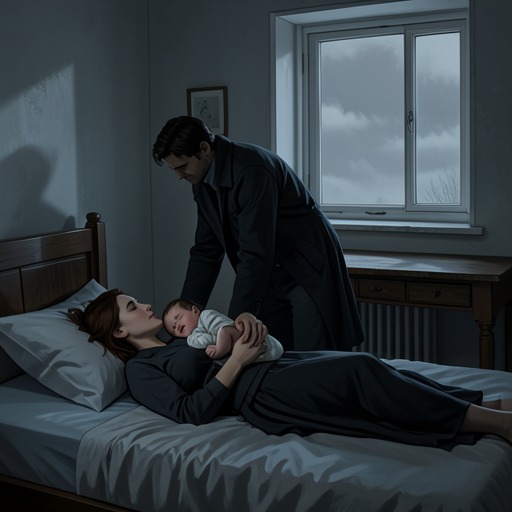
The contrast between Zhara’s situation and the developing family formed by Yohan Xyle Laroses and Kazumi Lhynx Valeres is central to the book’s treatment of parenthood. Yohan Xyle Laroses proposes marriage to Kazumi Lhynx Valeres partly so their child will not grow up confused by the presence of an unknown beloved partner and partly so he can properly uphold his responsibility as a parent. Their marriage is later completed, and the couple welcomes a baby. Zhara’s rejected pregnancy, by contrast, remains associated with abandonment, conflict, and the demand that a reluctant father be held accountable.
Zhara therefore functions less as a fully developed interior protagonist than as a pressure point in the plot’s ethical structure. Her presence exposes the consequences of treating sex, employment, and pregnancy as matters that can be dismissed once they become inconvenient. The story gives her a decisive narrative function: she carries concealed misconduct into public view, challenges Vixon Rae’s refusal, and helps distinguish responsibility accepted from responsibility evaded. Through her, the workplace becomes a site where intimacy produces obligations that neither reputation nor denial can make disappear.